
भारतीय उष्णदेशीय मौसम विज्ञान संस्थान
Indian Institute of Tropical Meteorology
पृथ्वी विज्ञान मंत्रालय, भारत सरकार का एक स्वायत्त संस्थान
An Autonomous Institute of the Ministry of Earth Sciences, Govt. of India


Scientist Profile
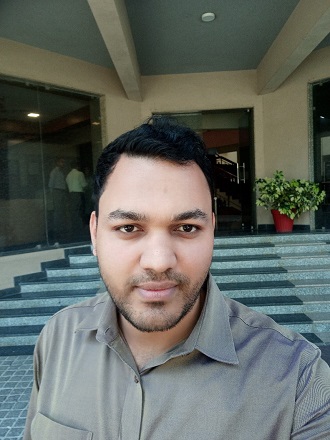
Dr. Vivek Singh
Designation
: Scientist E
Phone
: +91-(0)11-28743976
Fax
: +91-(0)11-28743976
Email ID
: vivek[dot]singh[at]tropmet[dot]res[dot]in
| Degree | University | Year | Stream |
|---|---|---|---|
| PhD | Banaras Hindu University, Varanasi | 2024 | Physics |
| M.Sc. | Banaras Hindu University, Varanasi | 2011 | Physics |
| B.Sc. | Ewing Christian College, Allahabad University, Allahabad | 2009 | Physics, Mathematics |
 Aerosol characteristics and variability over the Indo-Gangetic Basin, including chemical, optical, and microphysical properties.
Air pollution processes in urban and semi-arid regions of India and their interactions with meteorology
Tropical cyclones over the North Indian Ocean, with emphasis on intensification and air–sea interactions
Extreme rainfall and cloudburst events, focusing on mechanisms and their predictability
| Award Name | Awarded By | Awarded For | Year |
|---|---|---|---|
| Indian Space Research Organisation(ISRO) Space Science Promotion Scheme(SSPS) Fellowship | ISRO, Bengaluru | Pursuing M.Sc. Physics in Space Physics | 2009-2011 |
| Year | Designation | Institute |
|---|---|---|
| 2026-Present | Scientist E | Indian Institute of Tropical Meteorology, Pune |
| 2021-2025 | Scientist D | Indian Institute of Tropical Meteorology, Pune |
| 2017-2020 | Scientist C | Indian Institute of Tropical Meteorology, Pune |
| 2013-2016 | Scientist B | Indian Institute of Tropical Meteorology, Pune. |
| 2011-2012 | Trainee Scientist | Centre for Advanced Training(CAT), Indian Institute of Tropical Meteorology, Pune. |
Research Highlight

This study analyzed PM2.5 variability across the Indo-Gangetic Basin using data from 183 CPCB stations, NASA’s MERRA-2, and meteorological variables (2014-2023). Further, A machine learning framework was developed using Random Forest, Extra Trees, LightGBM, and a stacking ensemble model to improve surface PM2.5 estimation in Delhi, Kanpur, Lucknow, and Patna. Results showed the stacking ensemble outperformed all models, achieving R² = 0.79-0.82 and RMSE = 27-31 µg m⁻³. Trajectory and CWT analyses identified north-westerly transport and crop residue burning as dominant wintertime contributors, providing a robust framework for PM2.5 prediction and source attribution.